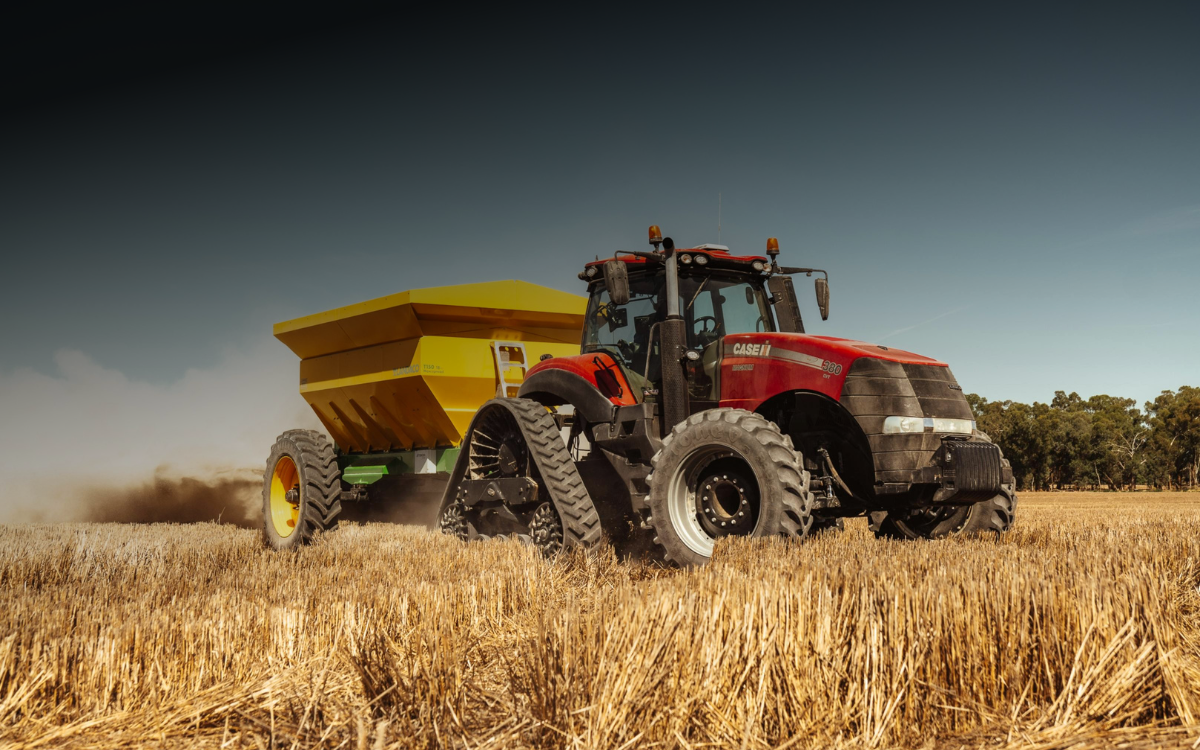
Global Agriculture Tractor Market to Reach 2.61 Million Units by 2031: Arizton as demand for connected, precision-enabled farming equipment continues to reshape the agricultural machinery industry. The latest market analysis projects steady growth through 2031, driven by expanding farm mechanization, digital agriculture technologies, and increasing adoption of smart tractors across both developed and emerging markets.
The global agriculture tractor market is expected to grow steadily over the next several years despite recent economic headwinds, according to new research from Arizton. The firm forecasts global tractor sales will reach 2.61 million units by 2031, up from 2.09 million units in 2025, representing a compound annual growth rate (CAGR) of 3.74%.
The outlook follows a period of market normalization after exceptionally strong equipment demand during 2021 and 2022. Higher interest rates, weaker farm incomes, and elevated dealer inventories slowed purchasing activity across several mature agricultural markets during 2025, particularly in North and South America. However, market conditions have begun stabilizing, with gradual recovery expected as financing conditions improve and replacement demand strengthens.
Asia-Pacific continues to dominate global tractor demand, supported by large-scale agricultural production in India and China. Government incentives for farm mechanization, improved access to agricultural financing, and ongoing investments in rural infrastructure continue to encourage equipment purchases across the region. China is also accelerating the replacement of aging machinery with higher-horsepower tractors designed to improve productivity and operational efficiency.
One of the most significant developments influencing the industry is the rapid adoption of connected farming technologies. Manufacturers are increasingly integrating Internet of Things (IoT) capabilities, telematics, remote diagnostics, and software-based fleet management into modern tractors, transforming them into connected agricultural platforms rather than standalone machines.
These technologies allow farmers to monitor equipment performance in real time, optimize maintenance schedules, reduce downtime, and improve operational efficiency. As rural broadband coverage, satellite connectivity, and 5G infrastructure continue to expand, connected services are expected to become standard across a broader range of agricultural equipment.
Precision agriculture is also becoming a defining feature of new tractor platforms. Technologies including GPS guidance, autosteering systems, smart sensors, and digital farm management integration are no longer limited to premium machinery. Manufacturers are increasingly introducing these capabilities across mid-range and compact tractors, making advanced farming technologies more accessible to a wider customer base.
The shift reflects broader changes in agricultural operations, where farmers are under growing pressure to improve productivity while reducing fuel consumption, labor costs, and resource usage. Connected tractors capable of generating operational insights are becoming valuable assets for data-driven farming strategies.
The report identifies the under-50 horsepower (HP) category as the largest segment of the global market, accounting for approximately 59% of total tractor demand. Compact tractors remain particularly popular among smallholder farmers throughout Asia-Pacific, Sub-Saharan Africa, and parts of Europe, where affordability, lower operating costs, and versatility continue to influence purchasing decisions.
Manufacturers are responding by expanding their compact tractor portfolios with improved fuel efficiency, enhanced operator comfort, and digital capabilities previously reserved for larger equipment. As mechanization accelerates across emerging agricultural economies, demand for smaller tractors is expected to remain a primary contributor to overall market growth.
Competition within the sector continues to intensify as established equipment manufacturers invest heavily in digital transformation. Industry leaders including John Deere, CNH Industrial, AGCO Corporation, Mahindra Tractors, and Kubota Corporation are expanding precision farming ecosystems that integrate tractors with software platforms for fleet management, predictive maintenance, and field analytics.
According to Statista, the global smart agriculture market continues to expand as digital technologies become central to modern farming practices. Meanwhile, McKinsey & Company has highlighted precision agriculture and connected equipment as important technologies for improving farm productivity, sustainability, and long-term operational resilience.
Beyond equipment innovation, sustainability is becoming a growing focus across the agricultural machinery industry. Manufacturers are developing tractors that deliver greater fuel efficiency, reduced emissions, and compatibility with precision farming systems that optimize fertilizer, pesticide, and water usage. These capabilities support both environmental objectives and farm profitability by reducing input costs.
As agriculture becomes increasingly technology-driven, tractors are evolving into intelligent farming platforms that combine mechanical performance with software, connectivity, and automation. The convergence of precision agriculture, connected machinery, and digital farm management is expected to shape the industry’s next phase of growth, positioning smart tractors as critical assets for improving productivity and supporting global food production.
Top Insights
- Arizton forecasts the global agriculture tractor market will reach 2.61 million units by 2031, supported by continued farm mechanization and increasing technology adoption.
- Connected technologies including IoT, telematics, and remote diagnostics are becoming key differentiators as manufacturers expand digital farming capabilities.
- Precision agriculture features such as GPS guidance and autosteering are moving beyond premium equipment into mainstream tractor portfolios.
- Under-50 HP tractors account for nearly 59% of global demand, driven by affordability and strong adoption across emerging agricultural economies.
- Leading manufacturers are investing in connected ecosystems that combine machinery, software, predictive maintenance, and data analytics to improve farming efficiency.
Have a story or business inquiry? Contact our SalesTechEdition team today.