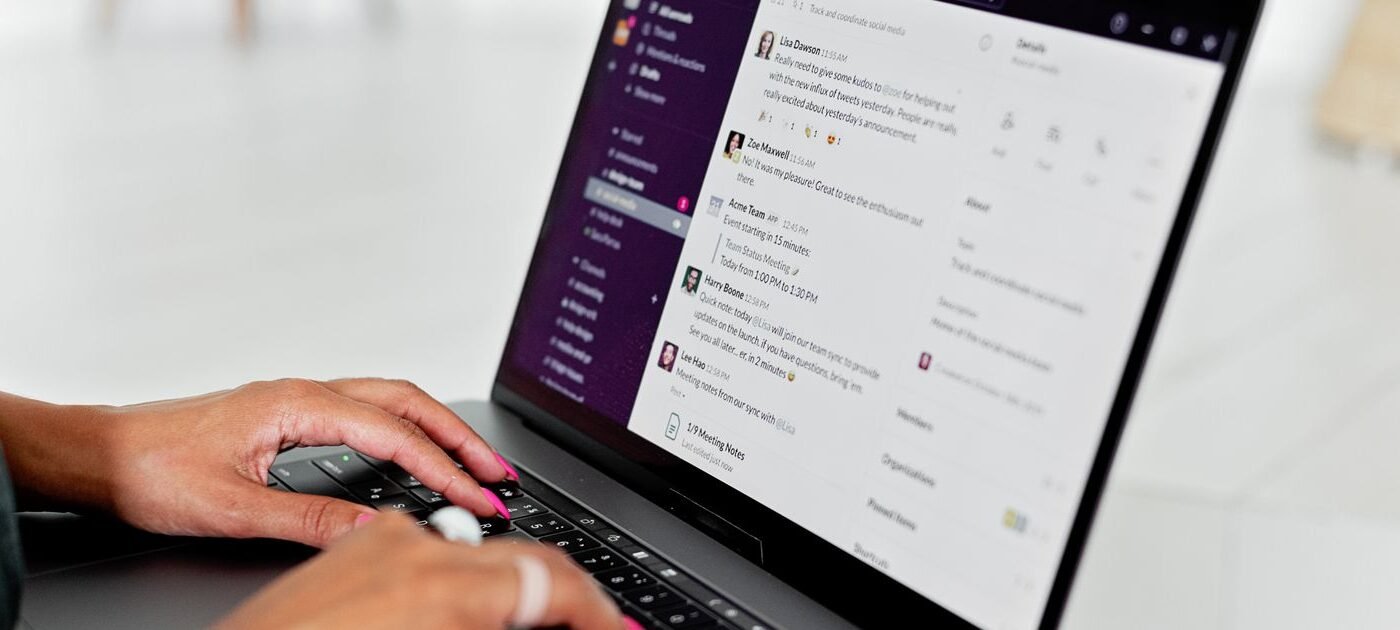

Salesforce published a set of Slack figures on November 3 that put a number on how much of the traffic in a team’s main work channel no longer comes from a person: 50% of Slack messages are from apps and agents.
What Salesforce reported
The post, titled “Half of Slack Messages Are No Longer From People,” says Slack now processes 127 million MCP tool calls every week, the automated actions agents take when they pull context from platforms such as GitHub, Salesforce and Jira. Salesforce says that figure is doubling quarter over quarter. It also reports 1 billion messages sent on Slack every day, more than 100,000 customers joining so far in 2026, and 1.9 million users interacting with third-party agents in Slack every week.
Salesforce calls Slackbot the fastest adopted AI product in its history. It adds that nine of 10 top frontier AI companies run their operations on Slack, and that those companies’ spending growth across Salesforce products is 435% year over year. Every number in the post is Salesforce’s own, published about a product it owns, and none of it has been audited by a third party.
Advertisement

The numbers that matter to a sales team
Three of the figures describe selling work directly. Salesforce says 90% of its own sellers use Slackbot to update Salesforce, 83% of its employees are weekly active Slackbot users, and the company runs 694,000 active Slack channels. In practice, the CRM record is being edited from a chat window for most of one large sales organization, and Salesforce is presenting that as the model for its customers.
The post also describes two customer examples. Rochester Electronics uses Slackbot and reusable Skills so employees can generate executive briefings, prep for customer meetings and run sales performance analysis from one place. Vercel runs an inbound sales agent in Slack that, in Salesforce’s words, lets one rep handle lead qualification, research and outreach drafting that would otherwise take a team of 10.
Matt Lewis, Partner Sales Engineer at Vercel, said: “At Vercel, everything starts in Slack. It’s our power grid for operations.”
Where the agent traffic comes from
A related Salesforce post from October 28 shows how the agent side is being built. The Slack Code API lets any custom agent join a team in Slack Code, which launched in August with Anthropic, Cognition, GitHub and Vercel as launch partners. Salesforce says GitHub Copilot opens a dedicated code channel on 30% of its agent sessions. Those channels give an agent a task-sized workspace where teammates can watch the work, add context and approve changes without leaving Slack.
That is an engineering example, and the Slack figures lean on engineering for their strongest proof: Salesforce says 65% of all code changes at Anthropic ship through Slack. Sales appears in the post through Salesforce’s own seller numbers and the Vercel agent. The post does not say how much of the 50% agent share comes from sales workflows, so a sales leader cannot read the headline figure as a measure of sales automation.
What it means for the sales leader
The practical consequence sits in how a team counts its own activity. If half the messages in a channel come from apps and agents, a message count, a channel’s volume or a count of CRM updates no longer tells a manager how much work reps did. Any dashboard that treats logged activity as rep effort needs a field that separates a person’s action from an agent’s.
Three questions are worth putting to a vendor or an internal admin before the next planning cycle:
- When Slackbot or an agent writes to a CRM record, does the record show who or what made the change?
- Can activity reports be filtered to human-authored entries only?
- Who owns each agent that posts in a deal channel, and who can switch it off?
The third question matters more as the share grows. A shared workspace for AI agents puts agents in the same channels as customers’ account teams, and an agent nobody owns keeps posting after its purpose has changed. Salesforce’s own Agent Fabric release on October 27 says fewer than half of organizations with agents evaluate them on live traffic, which suggests many teams have not yet built this oversight. That statistic comes from Salesforce’s description of its own product, so it deserves the same caution as the Slack numbers.
How this connects to earlier Slack and CRM moves
The figures arrive after a month in which agent access to sales systems moved quickly. Microsoft, HubSpot and Salesforce each now expose MCP servers, as we covered in Microsoft Ships a Sales MCP Server, and HubSpot and Salesforce Have Their Own. MCP tool calls are the unit Slack counts in its 127 million weekly figure, so the connectors described there are the same ones generating this volume of automated actions.
In our reading, the useful comparison for buyers is between the share of messages from agents and the share of CRM changes made through chat. Salesforce gave the first number and a 90% seller figure for the second. For other vendors’ customers, neither number is public, and a buyer evaluating a chat-first CRM workflow can ask for both from the vendor before signing.
What to do with the data
Treat the post as a statement of direction from the owner of the largest CRM, backed by company-reported numbers. The 127 million weekly tool calls and the 90% seller figure are the two worth tracking, because Salesforce says one doubles each quarter and the other describes its own sales floor. Ask your RevOps lead to find out which share of your own CRM edits already arrive through a chat tool or an agent, and add an author-type field to activity reporting before the share grows past the point where history can be reconstructed.
Source: Salesforce, “Half of Slack Messages Are No Longer From People. Here’s Slack by the Numbers.”