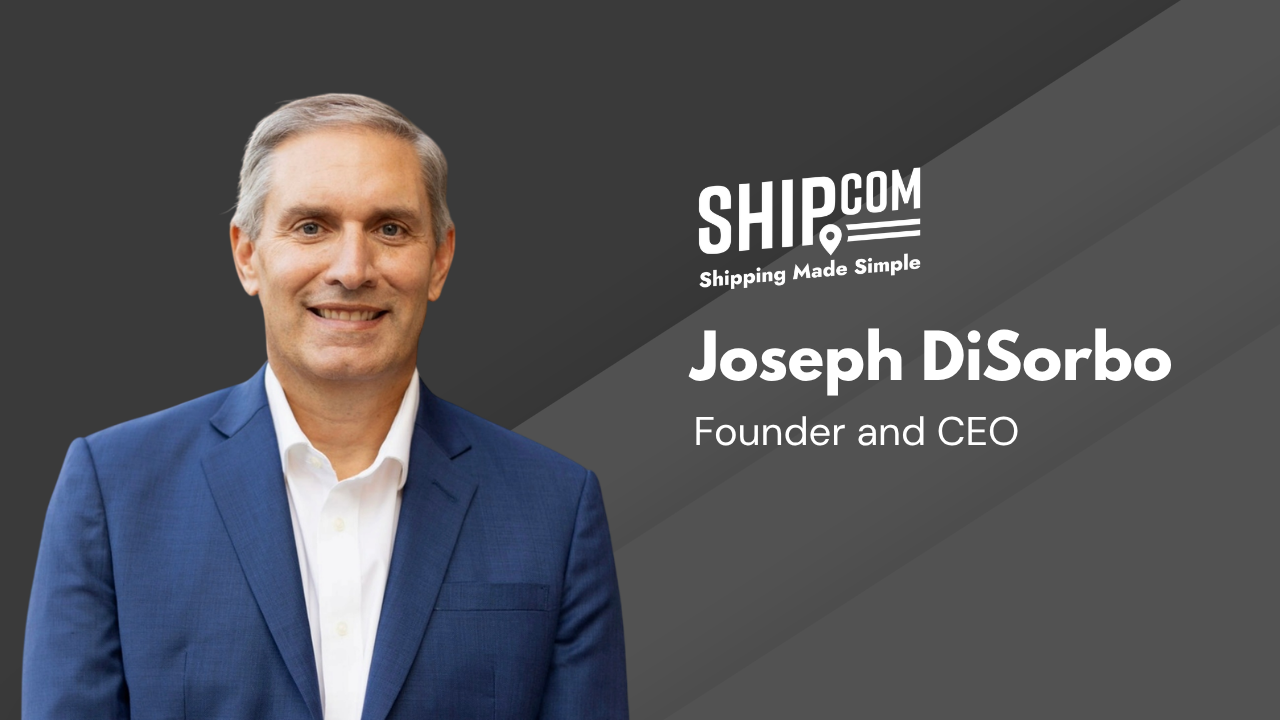
Ship.com, an all-in-one shipping platform, recently announced two artificial intelligence tools designed to streamline shipping processes for sellers and AI builders: SHIP AI™, a proactive AI shipping manager for online sellers, and SHIP MCP™, a Model Context Protocol (MCP) integration that brings Ship.com shipping capabilities directly into Claude Desktop CLI as an MCP connector while enabling builders to incorporate shipping into AI applications and agentic commerce workflows.
- How can AI-driven shipping intelligence help online sellers respond to rising carrier costs while optimizing delivery and fulfillment efficiency?
Carrier costs have gone up every year for as long as I have been in this business. The mistake is treating each increase as an event. It is a permanent condition, and the only question is whether your operation is built for it.
Most sellers respond the same way every January. They read the rate announcement, maybe switch a service or call their rep, and absorb the rest. None of that changes the fact that they are making a few hundred shipping decisions a week with no idea what each one costs them.
Advertisement

That is the real exposure. A seller knows their average cost per package. Almost none can name their worst ten percent of orders, and that is where the money goes: a box one size too large, a residential surcharge nobody priced in, an expedited service the customer never asked for. Each one is small. Together they are the margin.
Shipping intelligence means seeing that at the order level, before the label is bought, not on a statement a month later. SHIP AI does that inside a seller’s own account, against their real orders, carriers, and cost history. It runs the analysis on every order, catches address and surcharge problems up front, and brings the seller the handful that need a decision.
Rates will keep rising. The only response that compounds is a better decision on every order, at a volume no person can review by hand.
- In what ways can automating shipping decisions give smaller online sellers the operational capabilities traditionally available only to larger retailers?
The thing a large retailer has that a small seller does not is not software. It is a person whose job is to notice.
Somebody at a big operation watches the shipping desk all day. They see the address that will bounce, the package on the wrong service, the order sitting for two days, and they catch it before the customer does. A seller running their own business has every one of those problems and nobody assigned to noticing them, so the noticing happens at eleven at night or not at all.
That job is what automation moves within reach. That is not the purchasing power, the negotiated rates, or the warehouses. I would be careful with anyone who tells a small seller that AI closes that gap, because it does not.
What it does is take the noticing off the owner. SHIP AI reviews incoming orders, fixes what it safely can, and has shipments prepared before the seller starts the day. Because it runs on an open standard, it works from the AI tools sellers already use, such as Claude.
So, the capability that transfers is narrower than the usual pitch and more valuable. A ten-person company will never out-negotiate one shipping a thousand times its volume. What AI can do is get its owner out of routine work that software now handles better.
- What led SHIP.com to develop SHIP AI and SHIP MCP, and what gaps in traditional shipping workflows are these tools designed to address?
My mother ran a shipping store. What held her business back was never the shipping. It was re-entering information that already existed somewhere else, across carrier accounts that did not talk to each other. Ship.com was built to fix that at the platform level.
The AI version of the same gap became obvious about two years ago. Every function in a growing business had gotten its on-ramps: Sales, support, reporting, finance. Shipping had not, because shipping is opaque by design. Dimensional weight, zone pricing, surcharges that change quietly. A general-purpose assistant cannot help because it does not have the seller’s data, and even if it did, most sellers do not know what question to ask about a rate table. An assistant that waits to be asked will wait forever.
So, we built SHIP AI to not wait. It proactively works from the seller’s real orders and history and surfaces what is worth acting on before anyone thinks to look.
SHIP MCP came from a different observation. Sellers were already working inside AI tools and did not want another destination. Through the open Model Context Protocol standard, any builder can bring rating, labeling, tracking, analysis, and returns into their own product. Shipping comes to the seller instead of the other way around. Sellers can now build customized shipping tools around their own workflows instead of having to adapt to predesigned tools.
- How does SHIP.com keep sellers in control of financial decisions while allowing SHIP AI to automate much of the surrounding shipping workflow?
Anything that spends money requires the seller to say yes.
The cost is shown first. Nothing moves quietly. Using the shipping manager is opt-in. New capabilities start in a passive mode that shows what the system would have done without doing it, and the seller can give the AI shipping manager as much or as little authority as they feel comfortable with. Once they get comfortable that the correct decisions are being made, they can give it more authority. The user can also easily create bounded automations that instruct the AI how they want to act. In fact, you can simply instruct the AI shipping manager to create the rules under which they work.
The line is actually not between automation and control. It is between preparation and commitment. Preparation, which is most of the work, can run without asking. Commitment, where the money and the customer relationship sit, cannot.
Over time, sellers will grant more bounded authority, and they should. Approving a known service under a set cost for a verified order is a reasonable next step. It has to stay explicit, reversible, and visible. Any vendor who blurs that line is handing you their liability and calling it convenience.
- Why is integrating shipping directly into AI workflows becoming increasingly important as online commerce becomes more agent-driven?
Checkout is where the promise is made. Delivery is where it is kept. Agentic commerce has automated the first and largely ignored the second.
An agent can now research a purchase, compare total cost, evaluate the seller, and complete the transaction. Then a person still has to open a separate application, pick a carrier, buy a label, and track the package. The automation ends the moment the physical work begins, which is the part that determines whether the customer is happy.
That gap will not last, for two reasons. First, agents are increasingly transacting with other agents, and a workflow that needs a human to step outside the conversation breaks the chain. Second, agents remember. A person forgets a late delivery. An agent records it, with every hidden fee and poor recovery, across every order it has placed. Delivery performance will become a permanent input to whether a seller gets considered at all.
So, shipping has to be something an agent can reach directly, on the same terms as pricing or inventory. SHIP MCP makes rating, labeling, and tracking available to any compatible tool through an open standard, so a builder can build fulfillment into a product from the start.
The sellers who do well will be the ones whose operations agents can understand and operate. The physical half of commerce is about to be measured the way the digital half already is.
About Joseph DiSorbo:
Joseph DiSorbo is the Founder and CEO of Ship.com, an AI-powered shipping platform that simplifies fulfillment for online sellers and turns shipping data into actionable intelligence. He previously founded Webgistix, an ecommerce fulfillment company he built and sold to Rakuten in 2013. His founder story is rooted in firsthand experience growing up around shipping and entrepreneurial operations, watching how manual logistics can quietly hold business owners back. For more information, visit: https://www.ship.com/
LinkedIn URL: https://www.linkedin.com/in/disorbo/
About Ship.com:
Ship.com is an all-in-one shipping platform designed to help ecommerce businesses, marketplaces, and commerce platforms streamline fulfillment and scale seller ecosystems. The platform provides access to deeply discounted commercial carrier rates, AI automation tools, and integrations that simplify shipping operations across multiple sales channels. Through partnerships and integrations with leading marketplaces like Walmart Marketplace and Shopify, Ship.com enables sellers to manage orders, automate fulfillment workflows, and control shipping costs from a single platform. Born from real-world logistics challenges, Ship.com transforms shipping from a complex operational burden into a strategic advantage for entrepreneurs, marketplaces, AI builders, and the platforms that power modern commerce. Learn more at https://www.ship.com/